
Sage 100 to Dynamics 365 Data Migration
Moving from Sage 100 to Business Central? Mine automates the mapping between Sage's module-based tables and D365's data entity framework — restructuring charts of accounts, customer records, and inventory for the Microsoft platform.
Working with enterprise teams on active migration programs
3–5 weeks
to production-ready mappings
40–50%
cost reduction vs. manual migration
90%+
average mapping confidence
Most enterprise migrations start 6+ months behind schedule. Yours doesn't have to.
This guide is for VPs of IT, data architects, and migration leads at companies moving data from Sage 100 to Microsoft Dynamics 365 — whether you're scoping, planning, or mid-program.
Sage 100 stores data in module-specific tables (AR_Customer, AP_Vendor, CI_Item, GL_Account) on Pervasive or SQL Server, while Dynamics 365 Business Central uses AL-based entities with posting groups, number series, and dimensional accounting. Mine translates Sage's on-premise ERP data to Business Central's cloud model automatically.
Based on enterprise migration programs led by Mine's founding team
Last updated March 2026
How Mine automates your Sage 100 to Microsoft Dynamics 365 migration
Mine analyzes Sage 100's chart of accounts and proposes the Business Central dimensional decomposition — splitting embedded segments into G/L accounts and dimension values based on naming patterns.
Posting group assignments are generated automatically — Mine analyzes Sage's transaction patterns to recommend Customer, Vendor, Inventory, and General posting groups with correct GL account linkage.
Multiple extraction formats supported — direct SQL Server access, Pervasive ODBC, or CSV exports. Mine profiles whichever format you can provide from Sage 100.
Mine validates trial balance reconciliation after migration — ensuring Sage 100 and Business Central balances match as of cutover date.
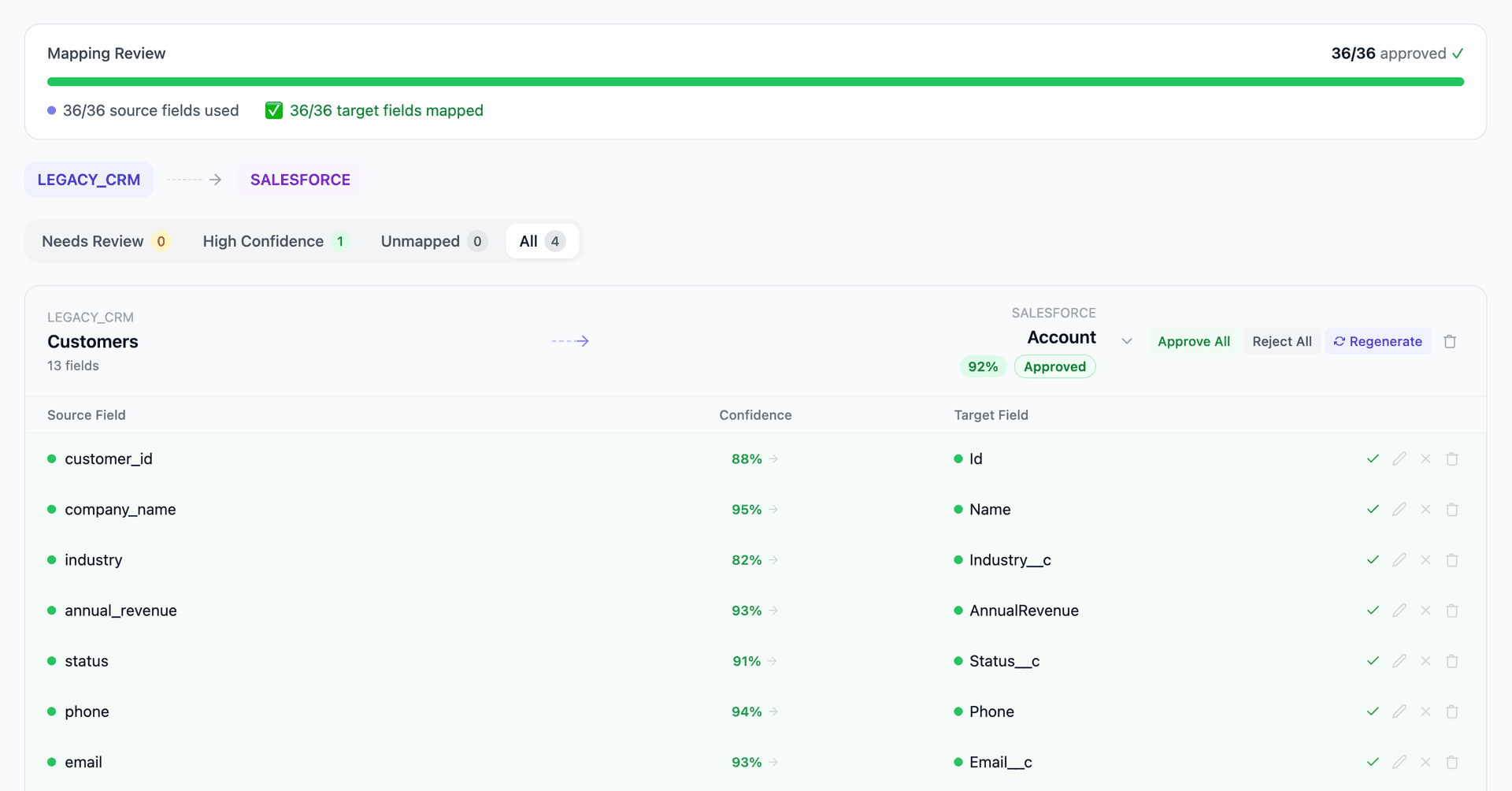
Get your Sage 100 to Microsoft Dynamics 365 mapping analysis — see results in under an hour
Migration timeline: manual vs. Mine
Traditional approach
Timeline
3–6 months
Estimated cost
$100K–400K
Team size
2–4 consultants
Typically requires
×Manual field mapping in spreadsheets
×Custom ABAP/SQL extraction scripts
×3–5 mock migration cycles
×Dedicated source system consultants
×Manual reconciliation testing
With Mine
Enterprise benchmarksTimeline
3–5 weeks
Team size
1–2 internal resources
Estimated cost
40–50% less
Included
✓Schema profiling & analysis
✓AI-generated field mappings
✓Transformation SQL
✓Validation & readiness reports
✓Production-ready load files
Common challenges migrating from Sage 100 to Microsoft Dynamics 365
Chart of accounts to Business Central dimensions
Sage 100 uses a flat or minimally segmented COA. Business Central uses G/L accounts with global dimensions, shortcut dimensions, and dimension values. The restructuring requires analyzing Sage's account naming patterns to identify embedded segments that should become dimensions.
Explore related migrations →Posting group configuration
Business Central uses posting groups (General, Customer, Vendor, Inventory) to control GL account assignment on transactions. Sage 100 assigns GL accounts directly on transactions. Setting up posting groups and mapping historical data to the correct posting logic requires careful analysis of Sage's transaction patterns.
Explore related migrations →Number series and document numbering
Sage 100 uses sequential numbering per transaction type. Business Central uses configurable number series with prefixes and gaps. Migrated documents must preserve original numbers while Business Central's series starts from the correct next value.
Explore related migrations →Inventory costing and tracking
Sage 100's inventory costing methods (FIFO, LIFO, Average, Standard) must map to Business Central's costing method field. Lot and serial tracking configurations differ between platforms. The valuation method must align before inventory data can load correctly.
Explore related migrations →Sage 100 to Microsoft Dynamics 365 field mapping — what data moves
10 data objects typically migrated
| Source Object | → | Target Object |
|---|---|---|
| AR_Customer | → | Customer |
| AP_Vendor | → | Vendor |
| GL_Account | → | G/L Account + Dimensions |
| GL_DetailPosting | → | General Journal |
| CI_Item | → | Item |
| SO_SalesOrderHeader | → | Sales Order |
| PO_PurchaseOrderHeader | → | Purchase Order |
| AR_OpenInvoice | → | Sales Invoice |
| AP_OpenInvoice | → | Purchase Invoice |
| PR_Employee | → | Employee |
Typical enterprise migrations include 500K–10M+ records across these objects. Mine handles profiling and mapping at any scale.
The cost of manual Sage 100 to Microsoft Dynamics 365 migration
Companies typically manage this during a Business Central implementation using RapidStart Services or CSV imports. The posting group configuration and dimensional accounting setup are the most manual parts.
Frequently asked questions
Related migration paths
In one enterprise migration, a single field mapping error in customer master data caused $100K in billing discrepancies that went undetected for 6 months.
Mine catches these issues before they reach production.
Built by a team that led SAP, Oracle, and Salesforce data migration programs for Fortune 500 companies at a Big 4 consulting firm. Currently in design partnership with enterprise clients running active migration programs.
Ready to migrate from Sage 100 to Microsoft Dynamics 365?
Tell us about your migration and we'll show you how Mine can help.
No commitment required. We'll review your migration scope and share a preliminary assessment within 48 hours.
You'll receive a preliminary mapping analysis showing how your source objects map to your target schema, with confidence scores and flagged risk areas.